
- About Us

We 365 Admin Support, just simplify your IT problems
Call for a free support. +91 96666 59505Platform Partnership



HIGHLIGHTS
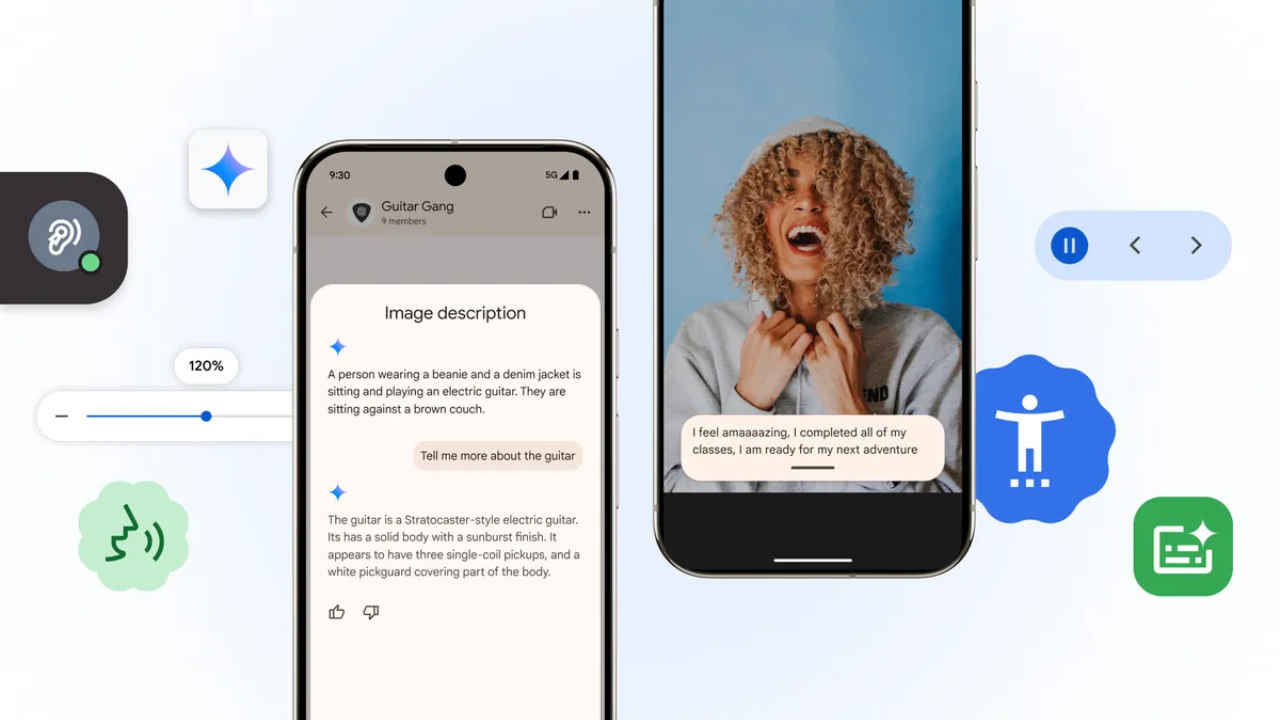
In celebration of Global Accessibility Awareness Day, Google has rolled out an array of innovative AI and accessibility features for both Android and Chrome. One of the standout updates is a significant enhancement to TalkBack, the screen reader specifically designed for users who are blind or have low vision. This update incorporates advanced capabilities through the integration with Gemini, a technology that empowers users to receive AI-generated descriptions of images. Notably, this functionality operates even when no alt text is provided, enabling users to engage with content more thoroughly.
To illustrate this, imagine receiving a photo from a friend showcasing their new guitar. With the newly improved TalkBack, users can get instant descriptions and even pose follow-up questions regarding specifics such as the make of the guitar, its color, or any additional elements present in the image. Furthermore, users can now request descriptions about their entire screen’s content. For instance, if someone is exploring sales on their favorite shopping app, they can inquire about the material of a product or check whether a discount is applicable.
For more detailed insights, you can also check out this article: Google Expands Gemini Beyond Smartphones to Watches, Cars, TVs, and XR Devices.
Additionally, Expressive Captions have received a noteworthy upgrade. The tech giant has introduced a new feature that captures the nuances of speech, going beyond just the words spoken. This allows for a deeper understanding of emotions and tones conveyed during conversations. For example, it’s now possible to distinguish when someone is exuberantly shouting “nooooo” versus calmly expressing “amaaaazing” during a sports event. New labels have also been added for various non-verbal sounds, including whistling and throat clearing. This rollout of Expressive Captions is currently available in English for users in the US, UK, Canada, and Australia on devices running Android 15 or newer.
For further details, check out: Google Android Show 2025: Android 16 and Wear OS 6 Unveiled with Improved Design, Security, and New Find Hub.
On the Chrome front, Google is enhancing how users interact with scanned PDF files. Previously, screen readers faced challenges in extracting text from these files. With the introduction of Optical Character Recognition (OCR), Chrome now has the capability to detect text within scanned PDFs, allowing users to search and read the contents seamlessly with screen reading technology.
Finally, Chrome for Android is also seeing enhancements to its Page Zoom feature. Users can now zoom in on text without disrupting the overall layout of the webpage. Customized zoom levels can be set, and individuals have the flexibility to apply these changes universally across all websites or tailor them to specific sites only.


